
CosyStone Designer Radiators in Egypt
Heating that reads as a finish rather than as equipment. CosyStone panels are natural-stone radiators only a few centimetres deep that sit flat against the wall and warm a room by radiation instead of by blowing air. They are made in Egypt, not imported — and Heatec Solutions is the exclusive distributor.
What a stone radiator actually is
A conventional radiator is a finned metal body that heats the air around it and relies on that air circulating to reach you. A stone panel works differently. The heating element sits behind a solid natural-stone face, and the whole face becomes a low-temperature radiant surface — closer to how a sunlit wall feels than how a heater feels.
- Radiant rather than convective — warmth reaches people and surfaces directly, instead of heating the ceiling first.
- A low surface temperature spread over a large area, so there is no scorching hot metal and no burnt-dust smell when the system starts in November.
- Almost no air movement, which means it does not stir dust around the room — a genuine difference in Cairo and Giza, where fine dust is a year-round fact.
- Stone holds heat. The panel keeps giving warmth back into the room for a while after it cycles off, which smooths out the temperature swing you feel with thin steel panels.
- It is a finished surface in its own right. The panel is the decorative object, so it does not need to be hidden behind furniture or boxed in.
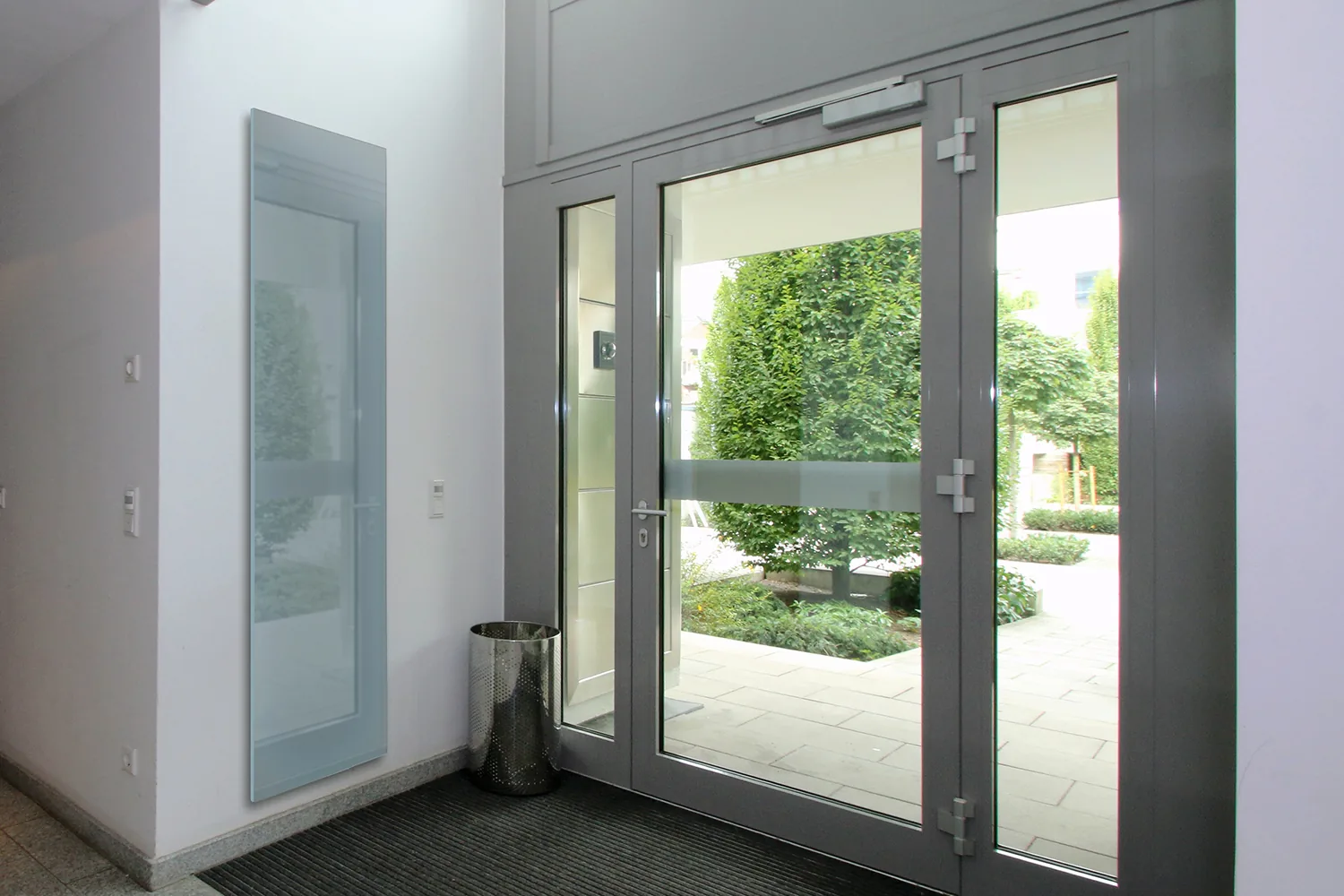
The factory is in Giza — and that is the advantage
Almost every premium heating product in this market arrives in a container. CosyStone does not. It is manufactured by CMB, an Egyptian producer of specialised building products based in Giza with more than 35 years in the construction industry, national and international patents, and export sales — including to European designer-radiator brands. When you buy CosyStone in Egypt, you are buying from the factory, not from the far end of an import chain.
- Custom sizes and finishes are genuinely possible. A factory forty minutes away can cut to a dimension that suits your wall; a shipping container cannot.
- Spare and replacement panels are a delivery, not an import cycle. If a panel is damaged during a fit-out, replacing it does not mean waiting on a shipment and a customs clearance.
- No exchange-rate exposure buried in the price. Imported designer radiators re-price every time the pound moves; this one does not.
- Lead times are measured against a production schedule you can actually be told, rather than an estimated shipping date.
- The same product line is made to export standard, so nothing about the specification is a domestic-market compromise.
The range
CosyStone is not a single product but a family of flat radiant panels sharing the same construction and differing in the face material. All of them mount flat to the wall and occupy the same shallow depth.
Slice Stone
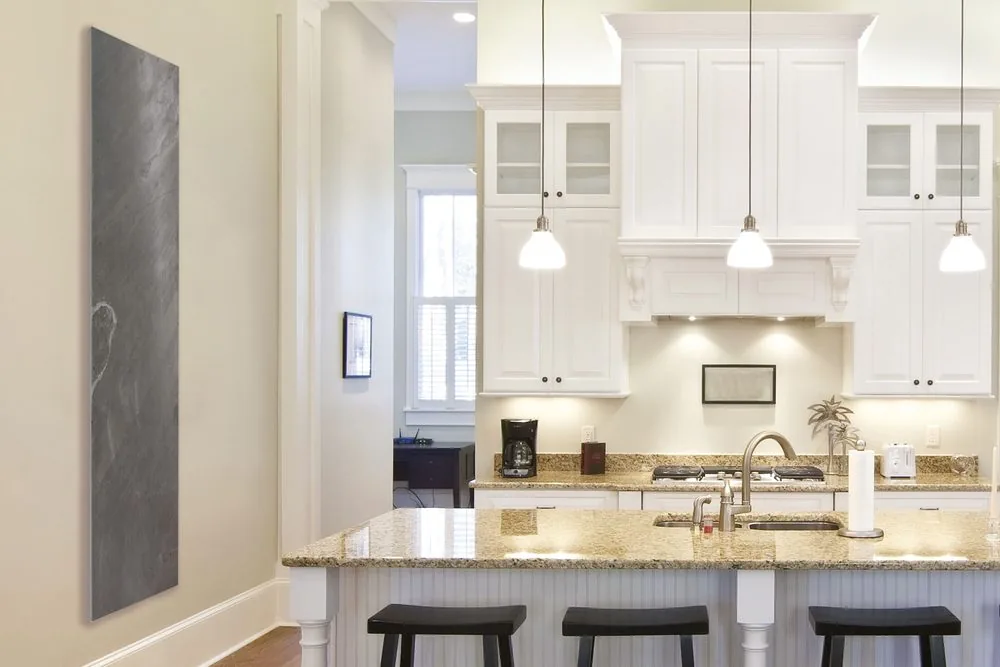
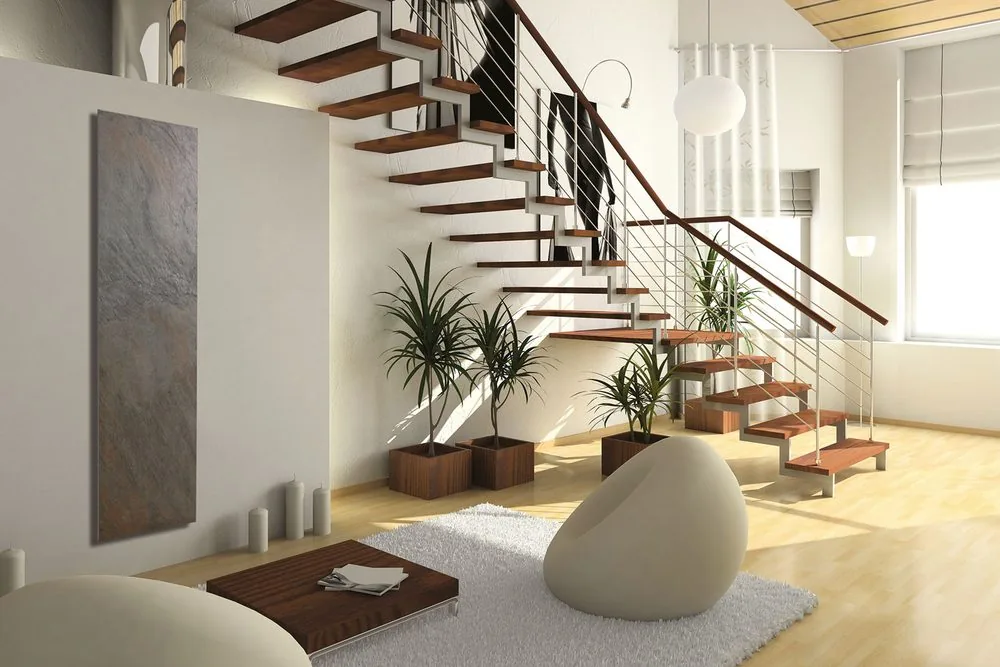
The signature range. A natural stone face with visible texture and relief — the finish most people mean when they say a stone radiator. Available across a range of stone colours and surface characters, from pale beige through slate and graphite tones.
Coloured Glass
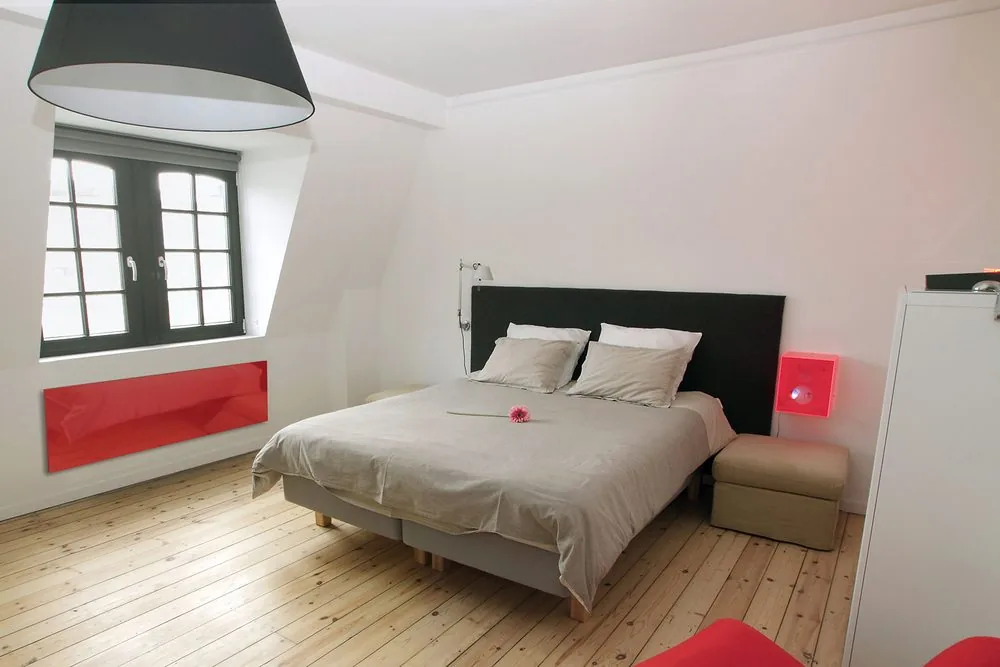
Toughened glass coloured through the body rather than surface-painted, so the colour cannot scratch off. Reads as a glass panel on the wall and suits a more contemporary interior than stone does.
Mirror
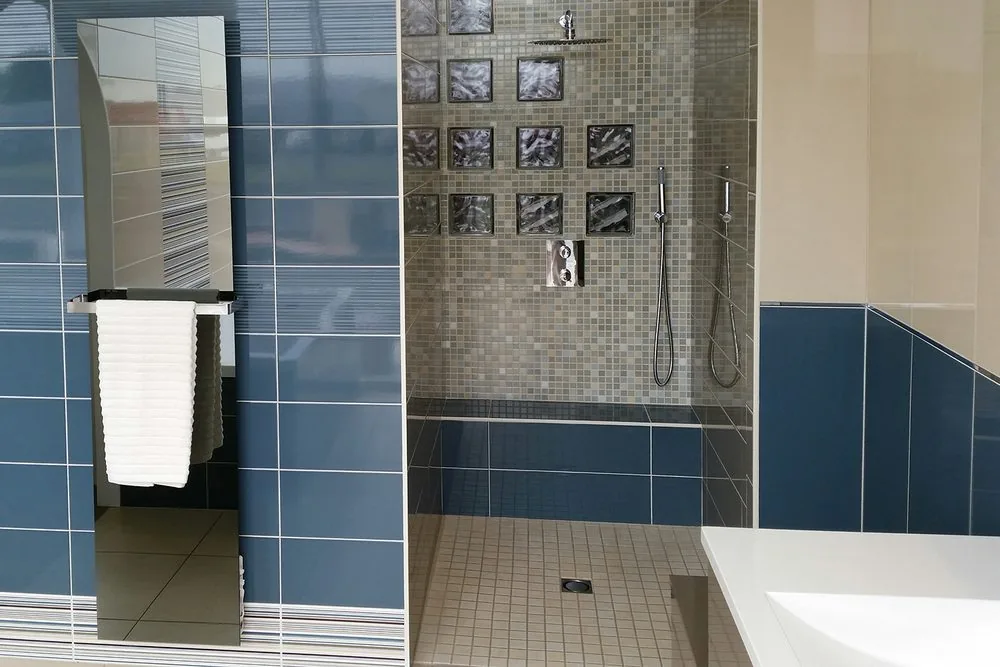
A toughened mirror panel that heats. Because the surface runs warmer than the room, it resists fogging — which is why this version usually ends up in bathrooms and dressing rooms, where it replaces a mirror you would have fitted anyway.
Gallery / Sphere
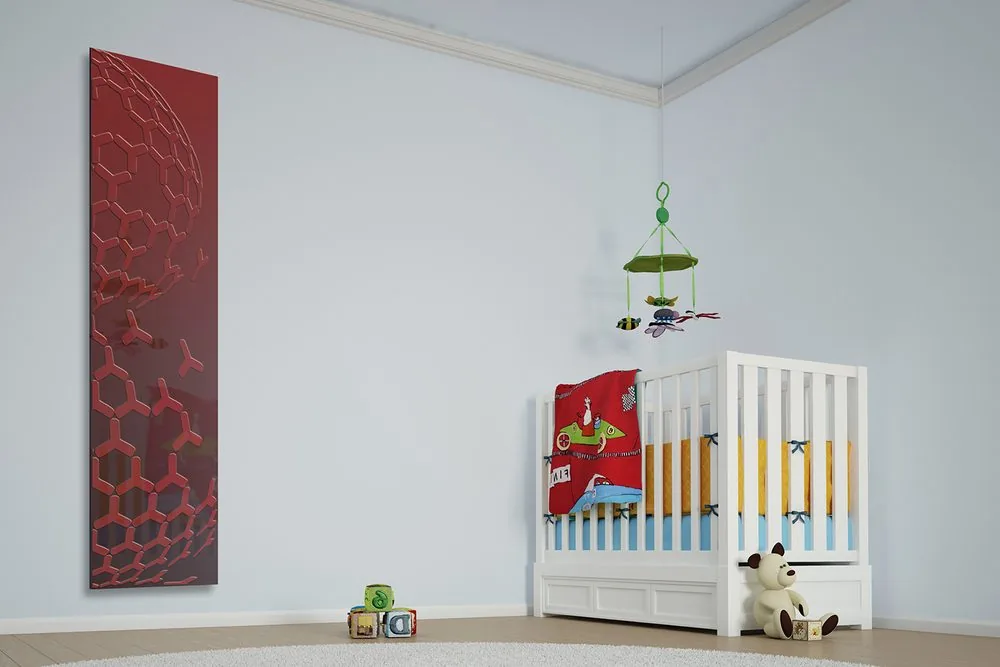
Decorative panels where the face carries a pattern or applied relief rather than a plain finish. These behave as artwork that happens to be the heat source for the room.
Wall panels
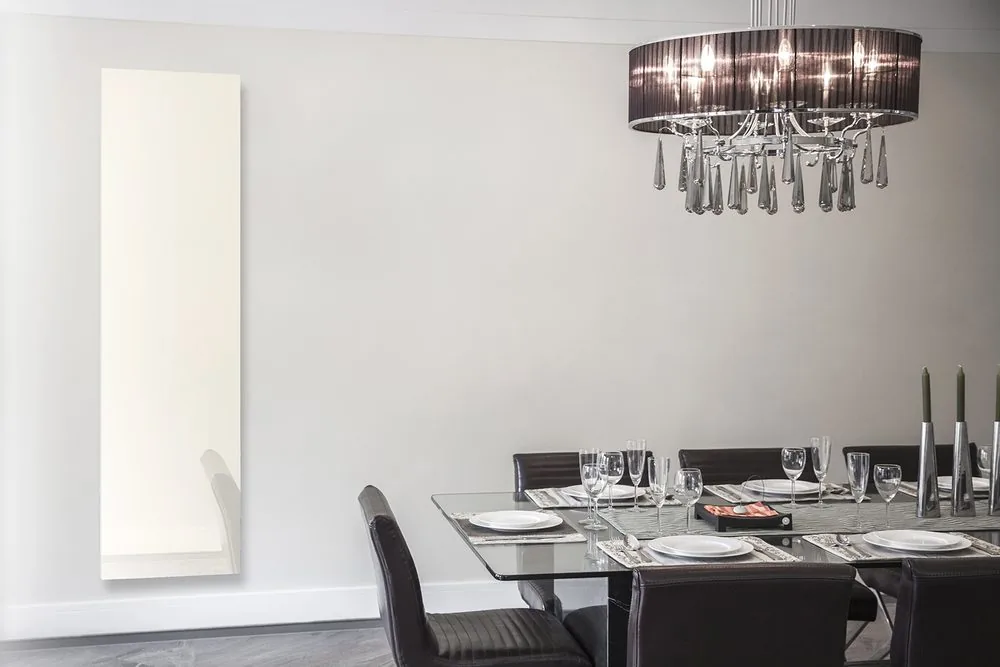
The plainer monochrome format, for rooms where the radiator should recede rather than be noticed — corridors, secondary bedrooms, offices.
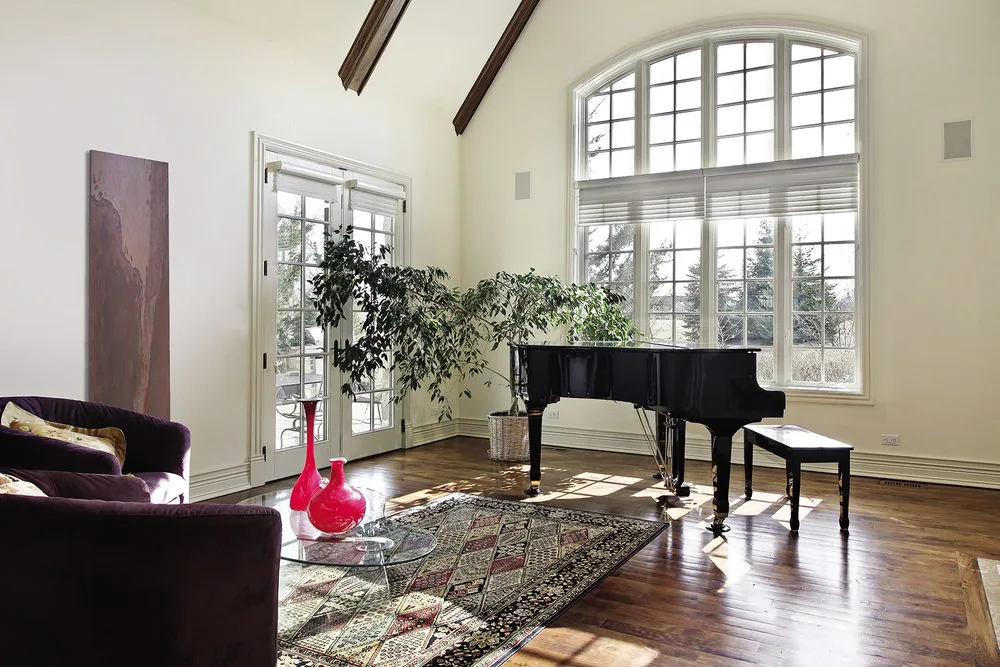
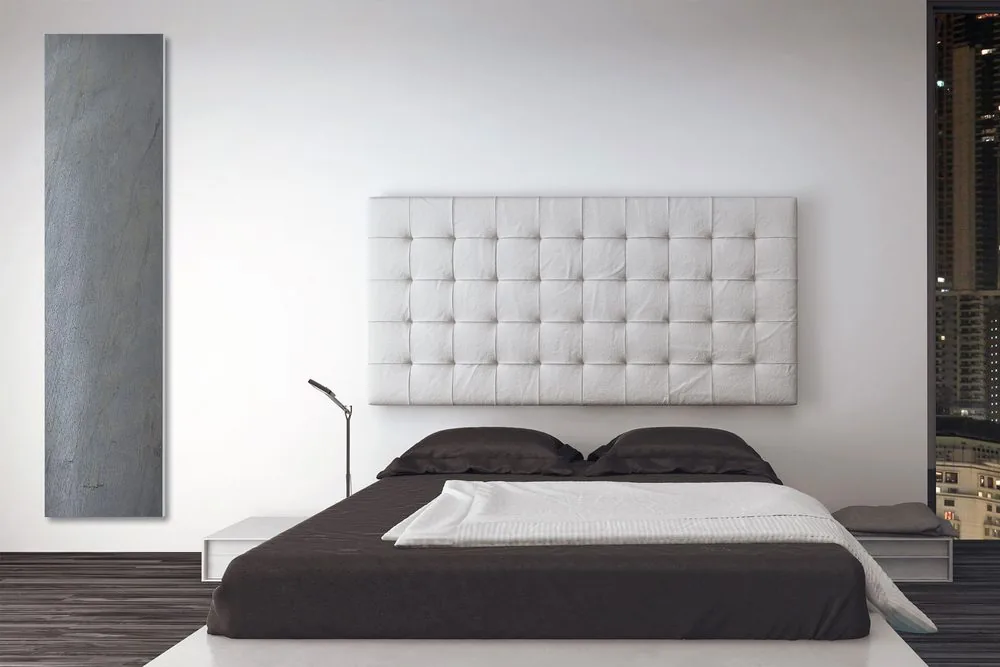
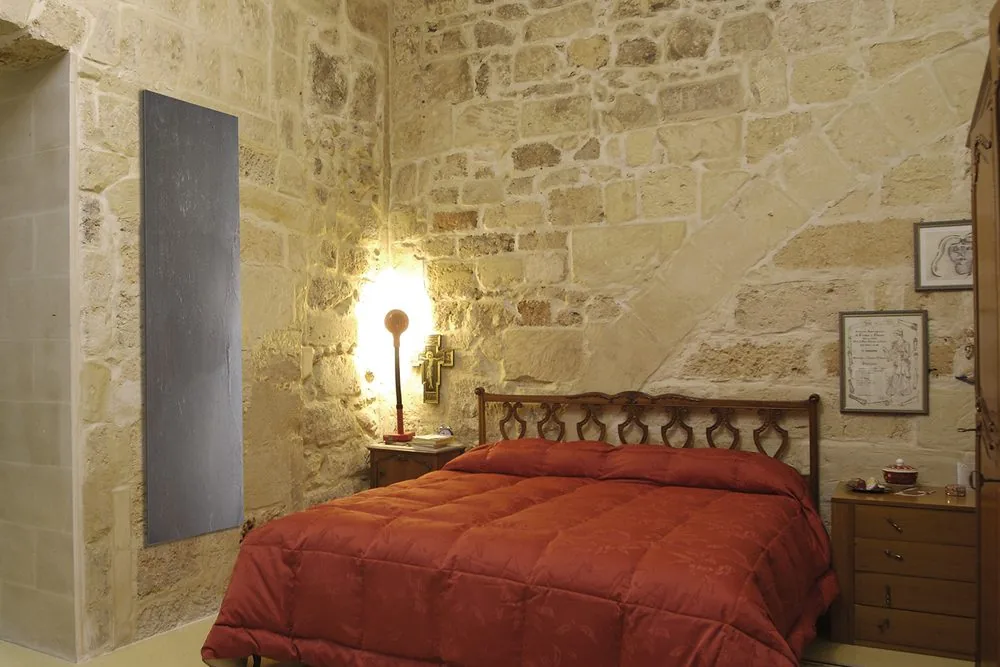
CosyStone in real rooms
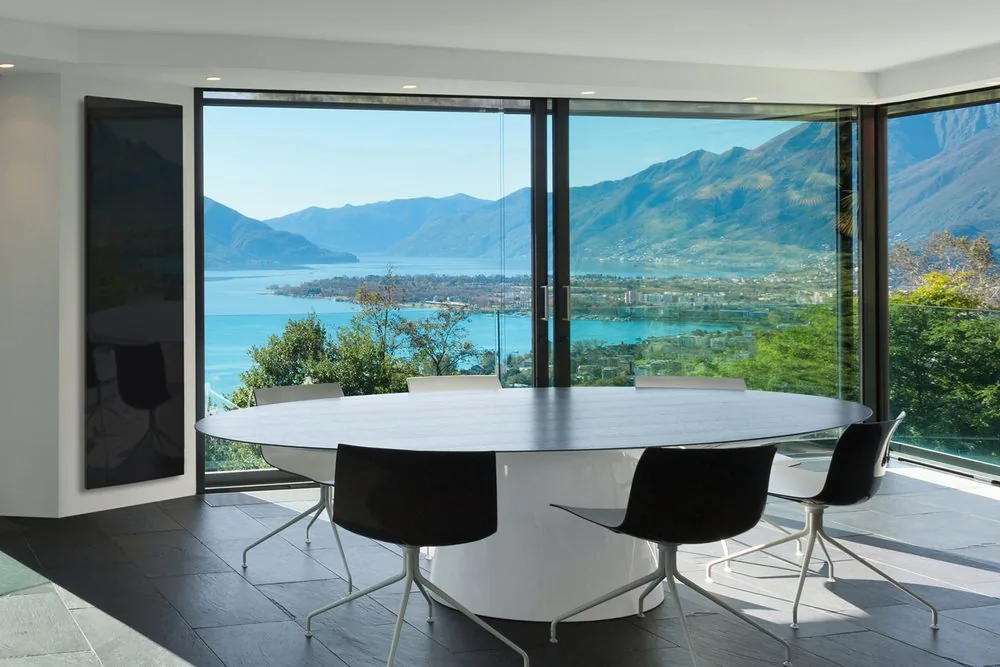
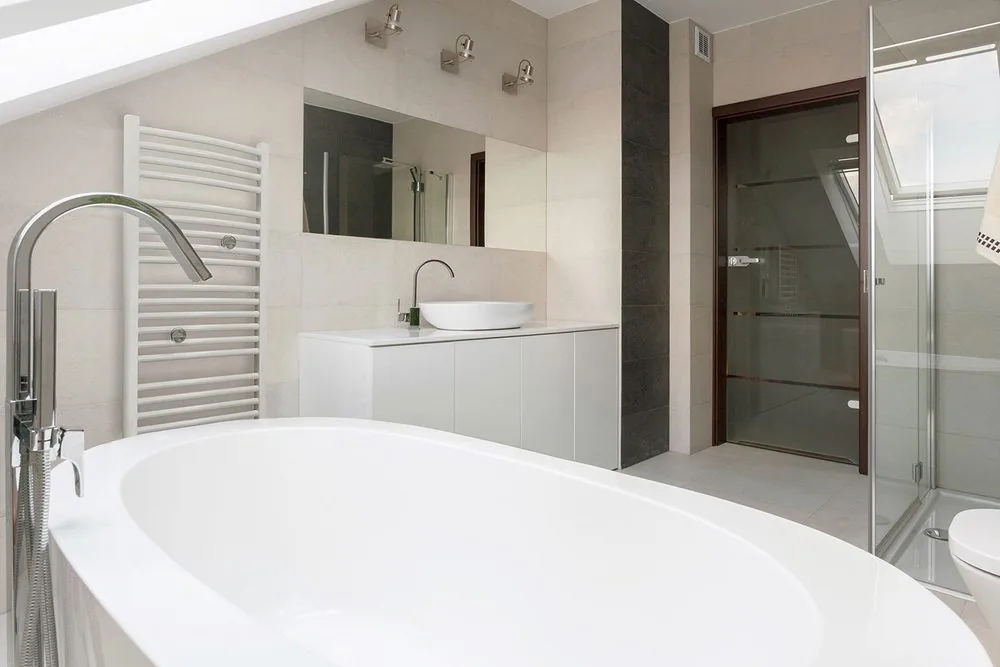
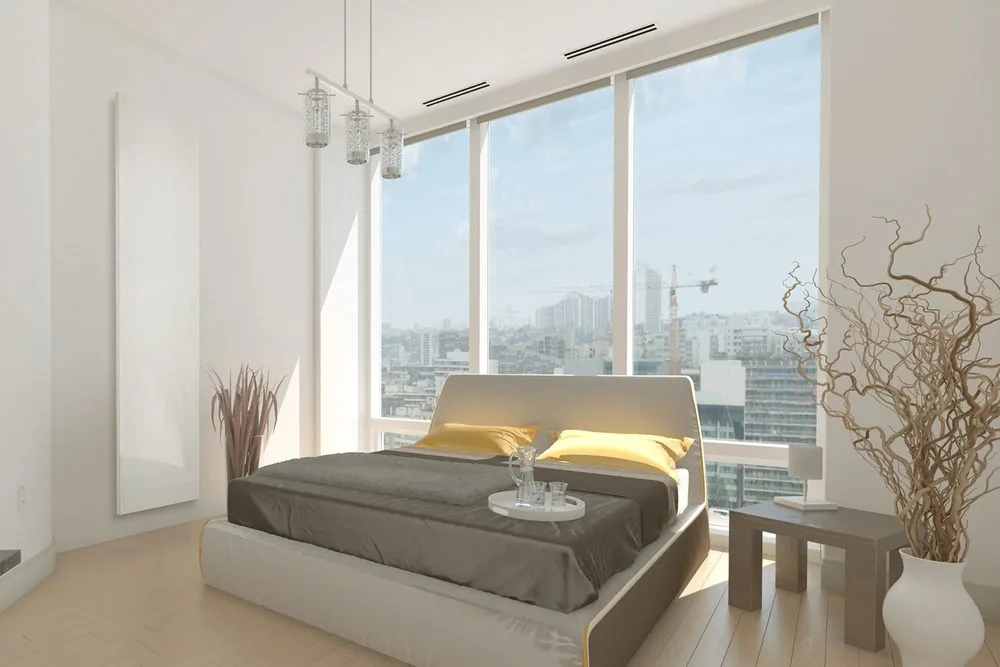
The same panel reads completely differently depending on the finish and where it sits. These are CosyStone installations across the full range of finishes — natural stone, coloured glass, mirror, decorative and towel-rail formats.
Published specifications
The figures below are the ones the manufacturer publishes. Output scales with panel area, so the size you need follows from the room's heat loss rather than from preference.
| Panel size | Output | Supply |
|---|---|---|
| 400 × 1800 mm | 800 W | 230 V |
| 500 × 2000 mm | 1200 W | 230 V |
Panels are only a few centimetres deep overall — the hydronic version runs marginally deeper than the electric one because of the internal waterway. Additional sizes, the full finish list and the exact depth per model are confirmed against the factory datasheet at survey stage; we would rather quote you the manufacturer's figure than an approximation.
Electric or hot water — which version you need
CosyStone is made in two forms, and the right one is decided by what already exists in the building, not by preference.
Hot water (hydronic)
The panel is plumbed into a central heating loop and fed by the same boiler or heat pump that runs the rest of the house. This is the version to choose whenever there is already a water-based system, or whenever one is planned — the running cost per unit of heat is far lower than resistive electricity, and it shares the same controls and zoning as everything else.
Electric
The panel plugs into a 230 V supply and needs no pipework at all. This is the version for a single room being added to, a finished apartment where chasing walls for pipes is not realistic, or a space used so rarely that a heating loop cannot be justified.
The point most often missed: the hydronic version runs on the same water loop as underfloor heating. That means a villa can have underfloor heating through the living areas and CosyStone panels in the rooms where a floor build-up is impossible or where a wall feature is wanted — all off one boiler or one heat pump, one set of controls, one commissioning. You are not running two heating systems.
See how Heatec designs space heating systems →Where these actually make sense
CosyStone is not the cheapest way to put heat into a room, and we will not pretend otherwise. It earns its place in specific situations.
- Finished interiors where the floor cannot be lifted. Underfloor heating needs a build-up; a wall panel needs a wall.
- Rooms where a conventional radiator would be visually unacceptable — a formal reception, a designed dining room, anywhere the client has spent real money on the interior.
- Bathrooms and dressing rooms, where the mirror version does two jobs in the footprint of one.
- Rooms that are heated occasionally rather than continuously, where the radiant response is felt quickly and there is no ductwork to warm through first.
- Rooms already served by underfloor heating that need a little more output in a cold corner or under a large glazed opening.
- Apartments where wall space is scarce and a slim flat panel takes far less room than a projecting radiator.
Why buy CosyStone from Heatec
- We are the exclusive distributor in Egypt, buying directly from the factory — there is no intermediate importer in the chain.
- We size the panels against the room's actual heat loss rather than a rule of thumb. An undersized designer radiator is an expensive ornament that never quite warms the room.
- We design and install the system behind them — boiler or heat pump, pipework, zoning and controls — so the panels are commissioned as part of a heating system rather than hung on a wall and switched on.
- Because the manufacturer is local, we can go back to them on custom sizes, finishes and replacement panels instead of telling you to wait for a shipment.
- Our engineering team has over 25 years in heating in this market, and we carry the after-sales responsibility ourselves rather than passing it to a supplier abroad.
Common questions
Are CosyStone radiators imported?
No. They are manufactured in Egypt by CMB in Giza. The same production also supplies designer-radiator brands abroad, so the specification is export standard — but the factory, the spare parts and the lead time are all local.
Can they replace my existing radiators?
In most cases yes. The hydronic version connects to the same flow and return as a conventional radiator, so it is a like-for-like swap provided the panel is sized to deliver the output that room needs. That sizing check is the part that matters and the part most often skipped.
Will they work with a heat pump?
The hydronic version does, and this is worth thinking about carefully. Heat pumps are most efficient at lower flow temperatures, and a radiant panel with a large surface area copes with a lower flow temperature far better than a small steel radiator does. It has to be sized for that lower temperature from the start, not converted afterwards.
Do they get hot enough to burn a child?
The surface runs warm rather than hot, spread over a large area — that is how a radiant panel is designed to work. It is noticeably gentler than an exposed metal radiator running at full flow temperature, though as with any heat source we would still not recommend a panel at floor level in a nursery.
How much heat does one panel actually give?
A 400 × 1800 mm panel is rated at 800 W and a 500 × 2000 mm panel at 1200 W. Whether that heats your room depends on its heat loss — glazing, orientation, insulation and ceiling height. A large reception with full-height glazing may need more than one panel, and that is a calculation rather than a guess.
Is the stone real?
Yes — the face is natural stone, which is why the texture and colour vary from panel to panel. If you want two panels in the same room to match closely, tell us at order stage so they can be selected together.
Can I get a size that is not on the list?
Usually. This is the practical benefit of a local factory — custom dimensions and finishes can be discussed rather than ruled out. Tell us the wall you are working with and we will find out what is possible before you commit.