
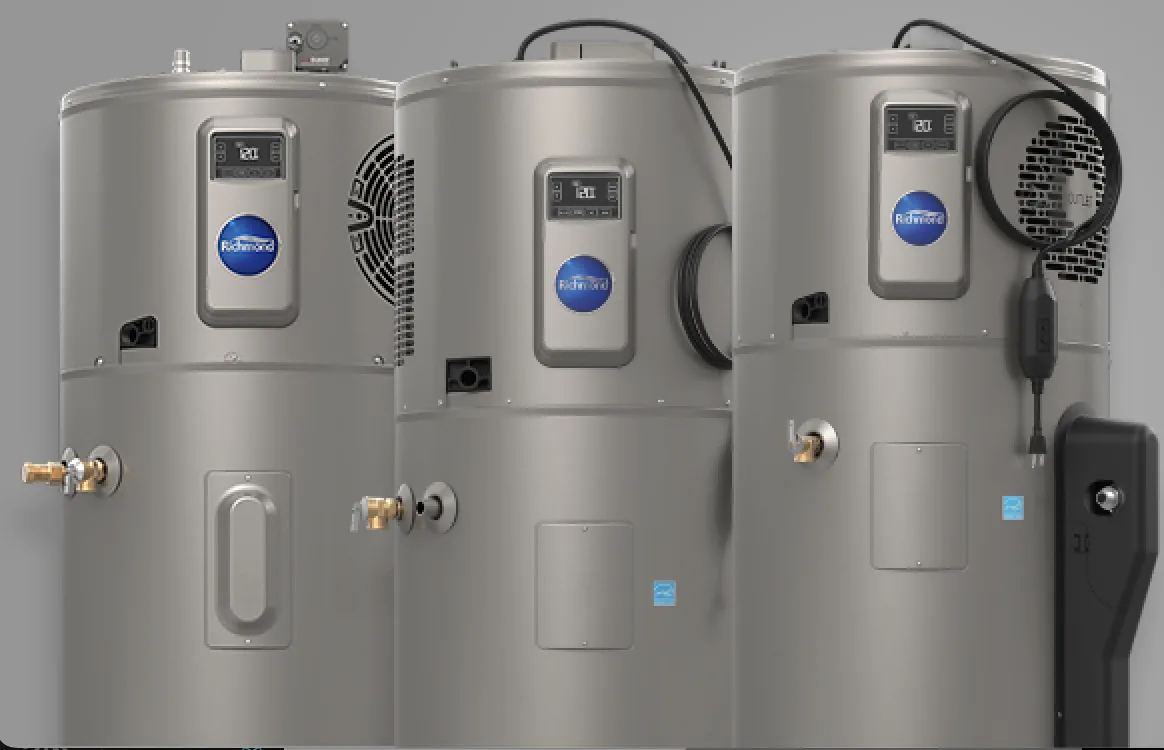
This guide is for Egyptian villa owners and contractors evaluating heat pump-based water heating for projects in Cairo, the North Coast, Sokhna, and across Egypt. It draws on Heatec Solutions' 25+ years of specialist heating-team experience and the technical realities of Egyptian buildings, climate, and supply chains. Where we make a claim about cost, warranty, or performance, we tie it to specific equipment and conditions rather than industry averages.
Why Water Heating Matters in Egypt Today
Hot water is one of the largest energy lines in any Egyptian property - and the one users complain about first when something fails. Getting the equipment selection right pays back daily for 12-15 years. Equipment failure during peak season - winter cold snaps for villas, busy weekends for hotels - translates directly into guest complaints, occupant dissatisfaction, or rushed emergency replacements at premium prices. Residential decisions are usually owner-managed, which means the buyer needs honest information rather than salesman-friendly summaries. The villa owner who reads three contractor proposals back-to-back almost always notices which one stops talking when the warranty question gets specific - and that's the one to walk away from.
How Heat Pump Water Heating Actually Works
Heat pump water heaters use the same refrigeration cycle to extract heat from surrounding air and transfer it into a storage tank. They use roughly one-third the electricity of resistive electric heaters for the same hot water output, with the trade-off being slower recovery and a need for adequate ventilation around the unit.
Egypt's climate is uniquely well-suited to this technology. Mild winters mean compressors and burners spend the majority of their operating hours at part-load rather than at peak - which is structurally the most efficient operating zone for both heat pumps and modern condensing gas equipment. Long shoulder seasons (October-November, March-April) further extend the band of high-efficiency operation. The result: real-world annual efficiency in Egypt routinely beats published European numbers by 5-15%, not the other way around.
Key Points for Buyers
The specific points that drive the buying decision for this exact use case:
- Per-person daily hot water consumption baselines
- Recovery rate vs storage capacity — the right balance
- Peak-hour considerations (morning shower rush)
- Multi-bathroom villa hot water profiles
- When two smaller units beat one large one
What to Consider Before You Commit
Before signing any contract, work through this short due-diligence list:
- Verify the actual heat-loss calculation, not a per-square-metre rule of thumb.
- Insist on the manufacturer's published warranty terms in writing, not verbal promises.
- Ask who shows up in year five - the install team, or a different sub-contractor?
- Understand the spare-parts availability for the specific model in Egypt.
- Check that the system is designed to allow future fuel-source upgrades without rework.
Real-World Performance in Egyptian Conditions
Heat pump water heaters installed in Egyptian villas consistently deliver 2.8-3.5 effective COP across the year, taking into account ambient temperature swings and standby losses. That translates to roughly one-third the electricity consumption of a resistive electric heater for the same hot-water output. A family of four with average consumption (around 200 L/day at 50C) typically sees annual electricity savings in the four-figure EGP range versus their previous electric heater.
The Heatec Solutions Approach
Heatec Solutions specifies, sources, installs, and services every system as one package. We work exclusively with premium brands - Grundfos, AO Smith, Henco, De Dietrich, Unical, Bradford White, Rheem, Giacomini, Sira, Faral, Radiatori 2000, CosyStone, Barbas Bellfires - and several quality Chinese brands where the value case is strongest. For residential projects we coordinate directly with the villa owner, the architect, or the contractor depending on the project stage. Our installs are designed to be heat-pump-ready even when the first phase uses gas - protecting your option to upgrade later without rework. Heatec publishes 5 years on heat pump water heaters, plus lifetime after-sales support.
Frequently Asked Questions
The questions Heatec clients ask most often when evaluating this exact choice:
What size tank for a family of 5?
Typically 200–300 litre tank with a heat pump module sized for ~3 kW heating input. The right answer depends on bathroom count and habits.
Next Steps
To request a site visit, a written specification, or a comparative quotation for water heating, contact Heatec Solutions today. We don't sell over the phone - every quote follows an on-site survey and an honest discussion of trade-offs. We'll give you the warranty terms in writing, the actual model and brand we propose, and a realistic timeline that accounts for your villa's stage of construction or your facility's operating calendar. If a heat pump isn't the right answer for your case, we'll tell you that - and recommend the alternative even if it means a smaller order for us.
Heatec Solutions | 18 Al-Jahez St., 7th District, Nasr City, Cairo | +20 120 4366660 | [email protected] | heatec-eg.com