
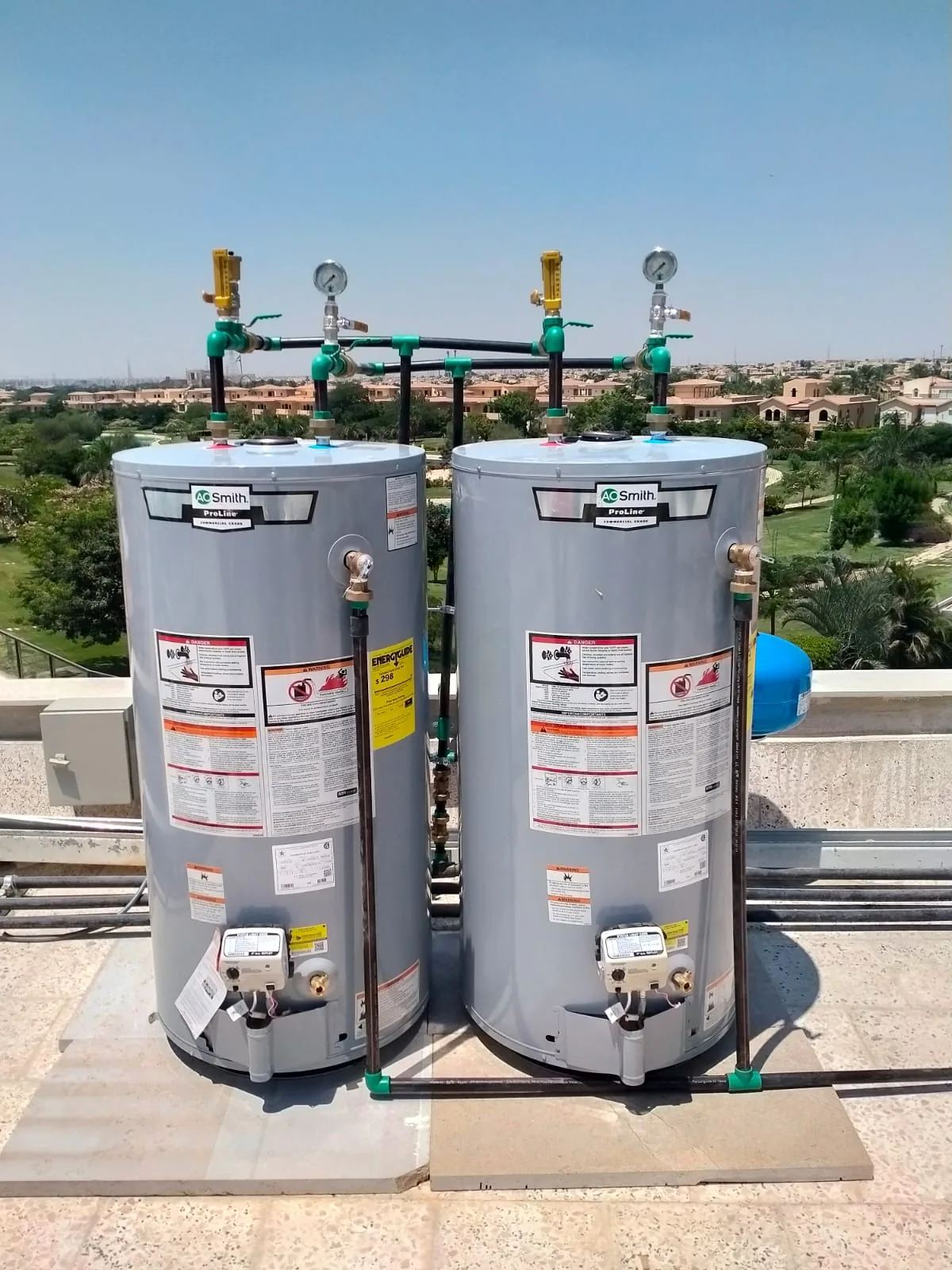
Two water heaters can carry identical efficiency ratings on the day they are installed, and be worlds apart eight years later. One is still delivering close to its rated performance. The other is scaled, corroding, and quietly costing its owner more every month.
The difference is almost always what the tank and heat exchanger are made of — the least glamorous specification in the entire product, and the one that most reliably predicts how the purchase will feel a decade from now.
Egyptian water is demanding
Water hardness varies considerably across Egypt, and in many areas it is significant. Hard water carries dissolved minerals that precipitate out when heated, depositing as scale on any hot surface they contact. Scale insulates the heat-transfer surface, forcing the system to work harder for the same result — efficiency degrades gradually and invisibly — and it accelerates the conditions in which corrosion takes hold. In a hard-water environment, tank material is arguably the most consequential specification on the sheet.
What good construction looks like
The traditional answer to tank corrosion was a glass or enamel lining over a steel tank, with a sacrificial anode rod to attract corrosion away from the tank wall. It works — but it depends on that anode being inspected and replaced periodically, maintenance that in practice is very often neglected until the tank fails.
The more robust modern approach is to build the wetted components from material that resists corrosion inherently. GRAT's H-Nova all-in-one series uses a full stainless steel inner tank — not a lining over steel, but a stainless tank. Its EnergyMax and EnergyPlus split series use premium 316 stainless steel coil construction for corrosion resistance and extended service life.
The grade matters. 316 stainless contains molybdenum, which materially improves resistance to chlorides — the specific corrosion mechanism that punishes water-heating equipment hardest. In a hard-water region, specifying 316 rather than a lesser grade is a decision you will be glad of years later.
Why durability is an efficiency argument
Here is the connection people miss. A corroding, scaling tank does not simply fail one day. It degrades continuously — losing a little efficiency every month, quietly increasing consumption long before anyone notices a problem. So corrosion resistance is not only about avoiding a replacement bill; it is about the system still delivering the savings you bought it for in year eight, not just year one.
Questions worth asking any supplier
- What is the inner tank material, specifically? If stainless, which grade?
- Is there an anode rod, and if so what is the inspection interval?
- What does the warranty actually cover, and for how long?
- What is the local water hardness, and how does that affect this recommendation?
A supplier who answers these clearly is one worth buying from. A supplier who deflects is telling you something.
Want to know how your local water quality affects your options? Book a free assessment and we'll specify the right system for your home.