
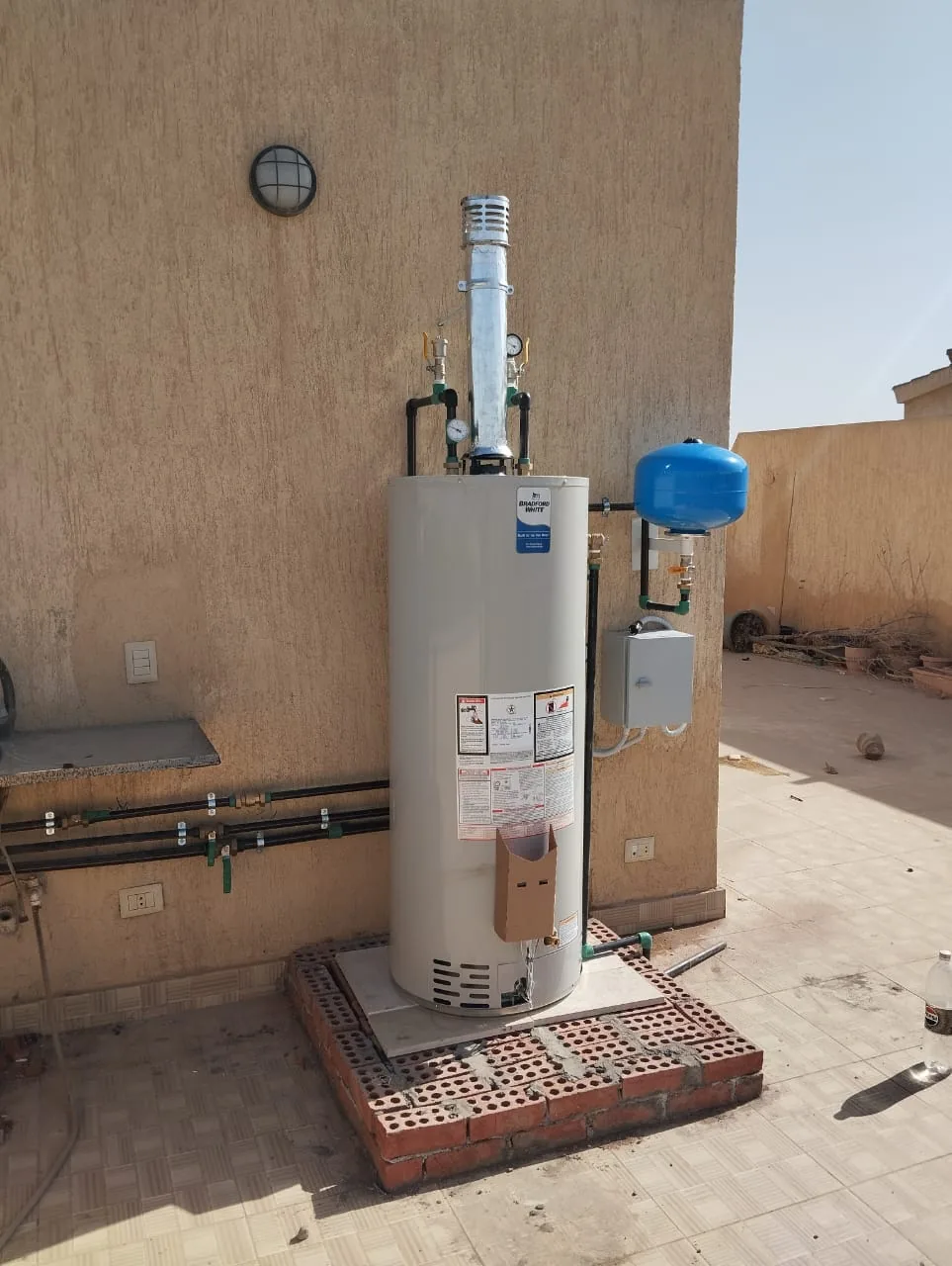
Gas water heaters — whether connected to the natural-gas network or fed from a cylinder — are common across Egypt because the fuel has historically been inexpensive. But the picture is changing: gas prices have been rising, safety expectations have tightened, and the technology of hot water has moved on. If you are weighing a gas water heater (GWH) against a heat pump water heater (HPWH), here is how they really compare for an Egyptian home.
Two very different ways to heat water
A gas water heater burns fuel. A flame heats the water directly or through a heat exchanger, and the combustion produces flue gases — including carbon monoxide — that must be safely vented out of the building. Like any combustion appliance, it cannot be more than 100% efficient, and real-world efficiency is lower once flue and standby losses are counted.
A heat pump water heater burns nothing. It moves heat from the surrounding air into the water using a refrigerant cycle, powered by a small amount of electricity. There is no flame, no fuel storage, no flue, and no combustion gases — and it delivers 3 to 4.5 times more heat than the electricity it consumes.
Safety: the difference you can't put a price on
This is where the gap is widest. A gas heater introduces an open flame and combustion by-products into the home. Poor ventilation, a blocked flue, or an ageing cylinder connection can lead to carbon-monoxide exposure or fire risk — which is why gas heaters demand correct flueing, ventilation and regular professional checks.
A heat pump water heater removes that category of risk entirely. With no combustion, there is no carbon monoxide and no open flame. The units carry an IP24 / IPX4 splash-protection rating and standard electrical safety, and the tanks are protected against corrosion — Richmond's RHEEMGLAS enamel with anti-bacterial coating, Heat Shift's enamel tank pulse-tested 280,000 times, and Atlantic's magnesium-anode protection. For homes with children, or for second homes left unattended on the North Coast or in Sokhna, removing the gas flame is a meaningful peace-of-mind upgrade.
Running cost: efficiency vs fuel price
Gas's appeal has always been a low fuel price. But efficiency tells the other half of the story:
- A gas heater turns, at best, less than one unit of useful hot water out of each unit of fuel energy.
- A heat pump turns each unit of electricity into 3 to 4.5 units of heat (COP 3.7–4.5), because most of the energy is harvested free from the air.
Whether gas or heat pump is cheaper to run on any given day depends on the current local gas and electricity tariffs — and Egyptian energy prices have been moving. What does not change is that the heat pump extracts far more useful heat per unit of purchased energy, so as gas prices rise, the heat pump's running-cost advantage grows. It also shields you from future gas-price increases, since it runs on electricity you already have.
Comfort and convenience
| Gas Water Heater (GWH) | Heat Pump Water Heater (HPWH) | |
|---|---|---|
| Energy source | Burns gas (network or cylinder) | Electricity + free heat from air |
| Useful efficiency | Under 100% | 370–450% (COP 3.7–4.5) |
| Open flame / combustion | Yes | None |
| Carbon-monoxide risk | Yes — needs flue & ventilation | None |
| Gas connection / cylinders | Required | Not needed |
| Hot water on demand | Instant (instantaneous types) | Stored in insulated tank (85–300 L) |
| Smart app control | Rarely | Yes (Wi-Fi) |
| Carbon footprint | Higher (burns fossil fuel) | Lower |
| Dependence on gas supply | Yes | No |
No cylinders, no refills, no gas bill. A heat pump frees you from arranging cylinder deliveries or being tied to the gas network — useful for villas and compounds where a gas connection is awkward or unavailable.
A steady reserve. Instead of heating on demand, a HPWH keeps a large insulated tank ready, so multiple bathrooms can draw hot water at once without the temperature drop that small instantaneous gas units can show under heavy use.
Lower emissions. Burning gas releases CO₂ directly in your home; a heat pump does not. With low-GWP refrigerants such as R290 in several models, it is the cleaner choice for the household and the environment.
The honest trade-offs
A gas heater is cheaper to buy and gives instant hot water from a compact unit. A heat pump costs more up front, needs a ventilated space for airflow, and stores water in a larger tank. But it removes the flame and the flue, cuts the energy used to heat water by a wide margin, and protects you from rising gas costs for the 10–15 year life of the unit.
For most Egyptian families building or renovating today, that combination of safety, efficiency and independence from gas is why the heat pump is increasingly the default choice. Heatec can assess your home's hot-water demand and recommend the right model and tank size.