
Hot water is one of the biggest hidden costs in an Egyptian home. After cooling, heating water for showers, the kitchen and the bathrooms is often the second-largest item on the electricity bill — and most households are still paying for it with old-style electric or gas heaters that were never designed to be efficient.
A heat pump water heater (HPWH) changes that equation. Instead of making heat, it moves heat — and that single difference is why it can cut the energy used for hot water by up to 75%.
It moves heat instead of burning energy to create it
A traditional electric water heater works like a kettle: electricity passes through a metal element and turns into heat. Every kilowatt-hour (kWh) of electricity you buy becomes, at best, one kWh of heat. There is no way to do better than that with a resistance element.
A heat pump works on a completely different principle — the same one your refrigerator and air conditioner use, run in reverse. A fan draws in warm ambient air, a refrigerant absorbs the heat from that air, a compressor concentrates it, and that heat is transferred to the water in the tank. The electricity is only used to run the pump that moves the heat, not to create the heat itself.
The result is that for every 1 kWh of electricity it consumes, a heat pump water heater delivers roughly 3 to 4.5 kWh of heat into your water. The rest is free energy harvested from the air around the unit.
What "COP" means on the bill
Manufacturers measure this with a number called the Coefficient of Performance (COP) — simply the ratio of heat produced to electricity consumed.
- An electric resistance heater has a COP of about 1.0.
- The heat pump water heaters Heatec supplies run at a COP of roughly 3.7 to 4.5 under normal conditions.
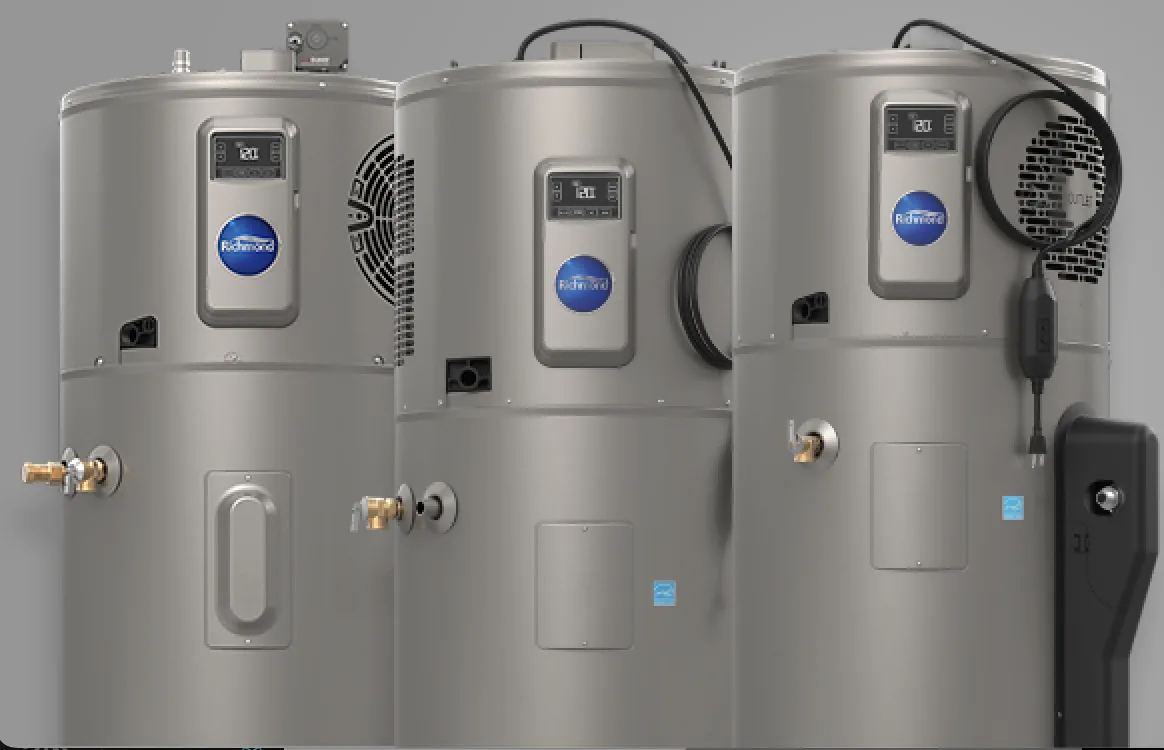
To put that in plain terms: a Richmond ODIN unit generates about 2.68 kWh of heat from just 0.667 kWh of electricity — about 4.2 times more hot water per pound spent than a conventional electric heater. A Heat Shift Hot Spring unit reaches a COP as high as 4.5, and the Atlantic Calypso Access runs up to 3.7.
That is where the headline figure comes from: up to 75% less energy for the same hot water.
Egypt's climate makes it work even better
Heat pumps get more efficient as the surrounding air gets warmer — there is simply more heat in the air to harvest. Egypt's climate, which is a challenge for so many appliances, is actually ideal here. These units are rated to operate across a wide ambient range (from as low as −7°C up to 55°C depending on the model), so they perform reliably in a Cairo summer, a North Coast spring or a desert winter night — and they deliver their best efficiency in exactly the warm conditions that dominate most of the Egyptian year.
You still get fast, plentiful hot water
A common worry is that "efficient" means "slow" or "not hot enough." Modern HPWHs solve this in two ways. First, they store hot water in a large insulated tank (from 85 to 300 litres), so a full reserve is always ready. Second, every unit includes a built-in electric backup element for unusually heavy demand or very cold spells — the system intelligently blends heat-pump and electric heating so you are never left with a cold shower, while still running on the efficient heat pump the vast majority of the time.
Many models also reach genuinely high temperatures on the heat pump alone — up to 70°C on Richmond and up to 75°C on Heat Shift — which means more stored hot water and better protection against bacteria, without falling back on the expensive electric element.
The bottom line
A heat pump water heater costs more to buy than a basic electric or gas heater, but it spends a fraction of the energy every single day for 10–15 years of service. For a typical villa or apartment, that lower running cost is what makes the difference back over the life of the unit — while also cutting the home's carbon footprint and removing the safety risks that come with gas.
If you would like Heatec to estimate the right size and the expected savings for your specific household, our team can size a unit to your hot-water demand and your installation space.